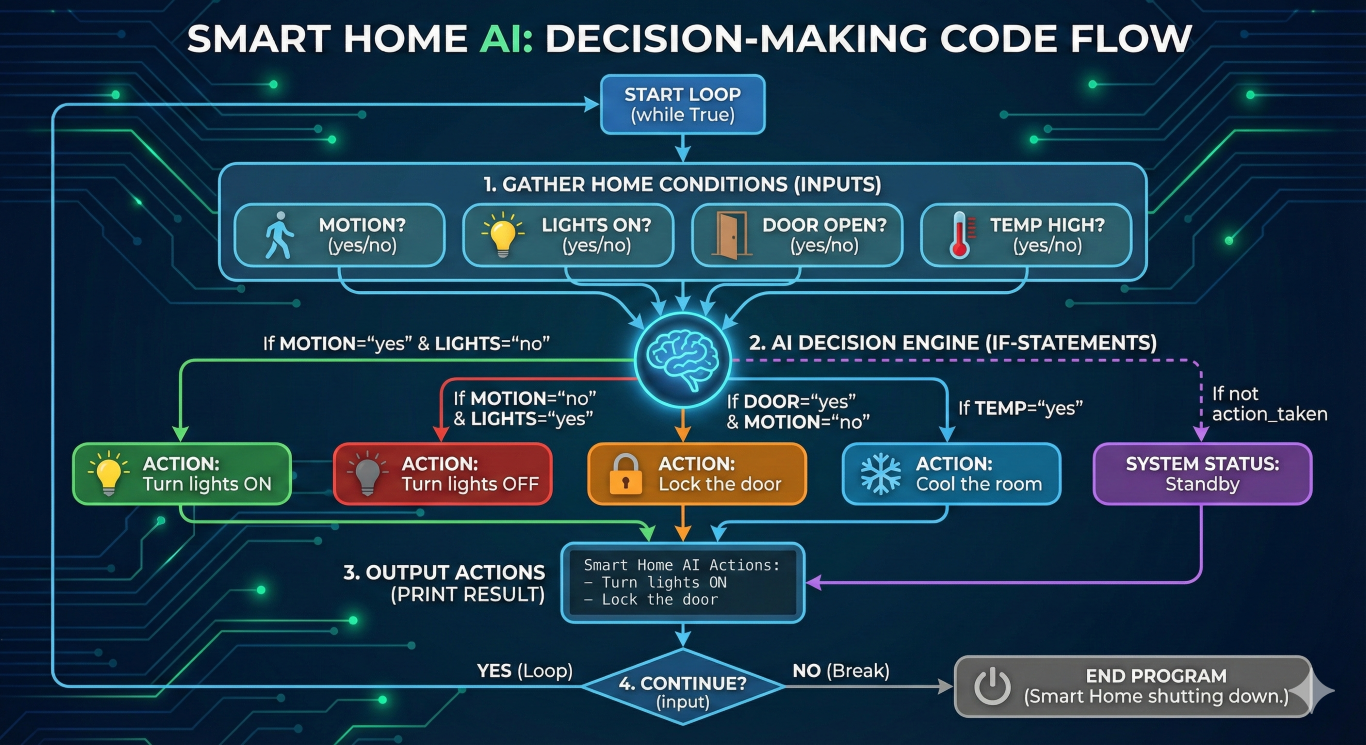
Simple Python Code
print("=== Smart Home AI (Decision-Making Rules) ===\n")

while True:
    # Ask input from user about home conditions
    motion = input("Is there motion? (yes/no): ").lower()
    lights = input("Are lights on? (yes/no): ").lower()
    door = input("Is door open? (yes/no): ").lower()
    temp = input("Is temperature high? (yes/no): ").lower()

    # AI decides what to do
    print("\nSmart Home AI Actions:")
    action_taken = False

    if motion == "yes" and lights == "no":
        print("- Turn lights ON")
        action_taken = True

    if motion == "no" and lights == "yes":
        print("- Turn lights OFF")
        action_taken = True

    if door == "yes" and motion == "no":
        print("- Lock the door")
        action_taken = True

    if temp == "yes":
        print("- Cool the room")
        action_taken = True

    if not action_taken:
        print("- System on standby")

    print()

    # Ask user to continue
    cont = input("Continue? (yes/no): ").lower()
    if cont != "yes":
        print("Smart Home shutting down.")
        break
Advanced Python Code
class SmartHomeAI:

    def __init__(self):
        self.state = "idle"
        self.power_mode = "normal"

    def perceive(self):
        print("\nUpdate Home Status:")
        motion = input("Motion detected? (yes/no): ").lower() == "yes"
        temp_high = input("Is the temperature too high? (yes/no): ").lower() == "yes"
        door_open = input("Is the main door open? (yes/no): ").lower() == "yes"
        lights_on = input("Are lights currently ON? (yes/no): ").lower() == "yes"
        return {
            "motion": motion,
            "temp_high": temp_high,
            "door_open": door_open,
            "lights_on": lights_on
        }

    def decide(self, env):
        actions = []
        if env["door_open"] and not env["motion"]:
            actions.append("lock_door")
        if env["motion"] and not env["lights_on"]:
            actions.append("turn_on_lights")
        if not env["motion"] and env["lights_on"]:
            actions.append("turn_off_lights")
        if env["temp_high"]:
            actions.append("cool_room")
        if not actions:
            actions.append("standby")
        return actions

    def act(self, actions):
        actions_map = {
            "lock_door":  ("Door locked.", "securing home"),
            "turn_on_lights": ("Lights turned ON.", "lighting home"),
            "turn_off_lights": ("Lights turned OFF.", "saving energy"),
            "cool_room": ("Cooling system activated.", "cooling home"),
            "standby": ("No action needed.", "idle")
        }
        messages = []
        states = []
        for action in actions:
            message, new_state = actions_map[action]
            messages.append(f"Action: {action} | {message}")
            states.append(new_state)
        self.state = ", ".join(states)
        return " | ".join(messages) + f" | State: {self.state}"


print("=== Smart Home AI Simulation ===")
ai = SmartHomeAI()

while True:
    env = ai.perceive()
    actions = ai.decide(env)
    print("\nSmart Home:", ai.act(actions))

    cont = input("\nContinue simulation? (yes/no): ").lower()
    if cont != "yes":
        print("\nSmart Home AI shutting down.")
        break
Infographics